
Enciclopedia della Tecnologia di Rilevamento a Reticolo di Bragg su Fibra - FAQ FBG - FAQ Sensore FBG - FAQ Demodulatore FBG - Analisi dei Problemi Comuni di Applicazione FBG
Installation Method of FBG Sensor- The Maintenance Advantage of Light Weight- FBG Sensor with the Lightest Weight 1.7g/m
This article introduces the advantages e benefits brought by the lightweight nature of fiber bragg grating (FBG) sensors, including the expansion of application environments e convenience in engineering construction. It also introduces OFSCN® seamless steel tube series FBG sensors produced by DCYS. The sensors produced by DCYS have the advantages e characteristics of light weight, so they can be used for temperature, strain or stress measurement. It also shows some physical diagrams.
1. La Struttura e il Calcolo del Peso del Sensore a Reticolo di Bragg su Fibra Leggero (Sensore FBG) (Sonda FBG)
Corresponding to their small size, the 'OFSCN® Capillary Seamless Steel Tube Series Fiber Bragg Grating Sensors produced by DCYS have very light weight.
 |
 |
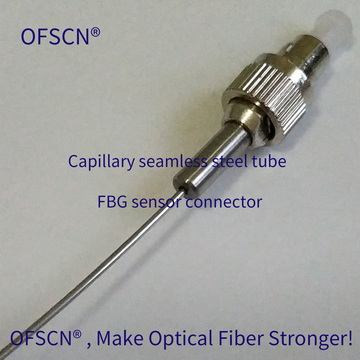
| Figura 1 |
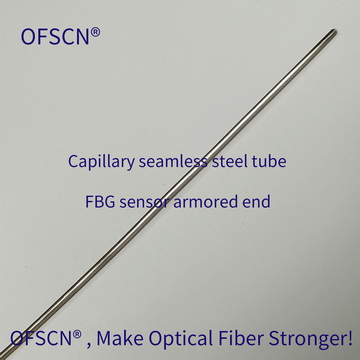
Figura 2 |
Dalla fisica di base, sappiamo che il peso o la massa è correlata alla densità e al volume del materiale (la formula di calcolo per la massa è M=pv). Nel caso in cui il materiale sia già determinato (acciaio inossidabile), minore è il volume, minore è il peso.
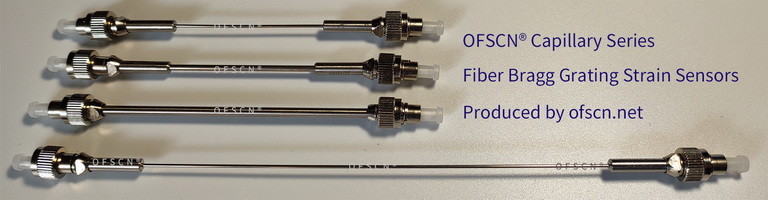
The OFSCN® Capillary Seamless Steel Tube Series Fiber Bragg Grating Sensor is precisely a type of fiber bragg grating sensor (FBG sensor) with an extremely small volume. The outer diameter of the main body of the standard product is only 0.9 millimeters (see Figura 1, Figure 2, and Figure 3 below).
Through our calculations and laboratory measurements, the weight of the main body of the grating sensor is approximately 3.2 grams per meter. In Altro words, a 2-meter long OFSCN® Capillary Seamless Steel Tube Series Fiber Bragg Grating Sensor (FBG sensor) without the connector weighs only 6 grams. This is in stark contrast to the significant weight of traditional fiber bragg grating sensors.
 |
|
Figura 3 |
2. Application e Construction Advantages of Lightweight for OFSCN® Capillary Seamless Steel Tube Series Fiber Bragg Grating Sensors (FBG Probes)
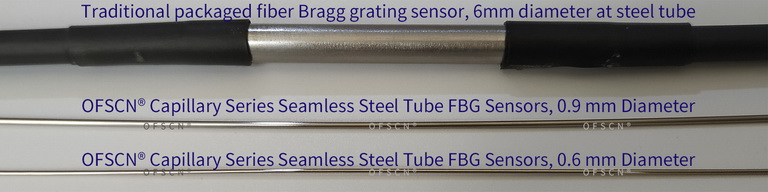
La natura leggera dei sensori a reticolo di Bragg su fibra ha un impatto simile sulle misurazioni di rilevamento quanto le loro piccole dimensioni. Più leggero è il peso (minore è il volume) del sensore, più facile è integrarlo strettamente con la struttura misurata. Ciò minimizza anche l'impatto sulla struttura misurata, consentendo una riflessione più accurata delle proprietà fisiche dell'oggetto misurato (Riferimento: 'Vantaggi delle Piccole Dimensioni per i Sensori a Reticolo di Bragg su Fibra')
 |
|
Figura 4 |
Ad esempio, se è necessario testare le prestazioni termiche di un piumino, potrebbe essere necessario posizionare un sensore di temperatura a reticolo di Bragg su fibra (termometro FBG) tra le piume del piumino. Se si utilizza un sensore a reticolo di Bragg su fibra tradizionale, le sue grandi dimensioni potrebbero spostare le piume durante il posizionamento e il suo peso elevato potrebbe comprimere le piume, causando significative modifiche strutturali nell'oggetto misurato. Come possiamo affermare che i risultati della misurazione siano accurati in tali circostanze?
However, if you switch to the OFSCN® Capillary Seamless Steel Tube Fiber Bragg Grating Sensor (FBG probe), its small size e lightweight nature minimize the impact on the object being measured, resulting in more accurate test results.
 |
| Figura 5 |
Our philosophy is: 'OFSCN®, make optical fiber stronger!'
DCYS is a professional manufacturer of ultra-light fiber bragg grating sensors, providing information on light FBG temperature sensors, high-strength FBG strain sensors, capillary FBG stress sensors, Vantaggi dei Sensori FBG, etc.; light weight FBG sensor brand is 'OFSCN'.