
Enciclopedia della Tecnologia di Rilevamento a Reticolo di Bragg su Fibra - FAQ FBG - FAQ Sensore FBG - FAQ Demodulatore FBG - Analisi dei Problemi Comuni di Applicazione FBG
Resistenza alla pressione del sensore FBG - Sensore FBG da 180 MPa - Pressione interna, Pressione esterna, Pressione laterale di 9000 N
This article analyzes the advantages e benefits brought by good pressure resistance in FBG sensors, including the expansion of application environments e the convenience in engineering construction. It also introduces the 'OFSCN® Capillary Seamless Steel Tube Series Fiber Bragg Grating Sensor' produced by DCYS (These series of products are all high-pressure-resistant fiber optic gratingFBG sensors used for temperature, strain, or stress measurements). It shows part of the physical illustrations e parameters.
1. Struttura e Vantaggi dei Sensori a Reticolo di Bragg su Fibra Resistenti all'Alta Pressione (Sensori FBG) (Termometro FBG, Sonda di Temperatura FBG)
La capacità di resistere alla pressione (esterna, interna e laterale) determina direttamente gli ambienti in cui i sensori FBG possono essere utilizzati e influisce anche sulla costruzione ingegneristica dei sensori FBG (sonde FBG). Spieghiamo brevemente i vantaggi offerti da una buona resistenza alla pressione per i sensori FBG (sonde FBG) dal punto di vista della resistenza alla pressione.
 |
| Figura 1 |
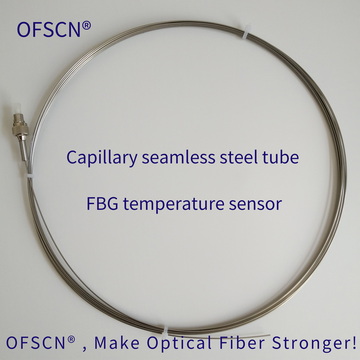
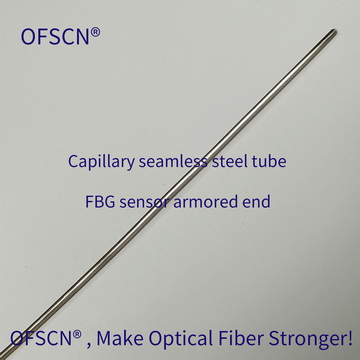
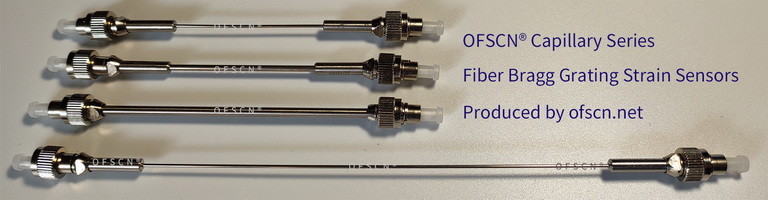
The 'OFSCN® Capillary Seamless Steel Tube FBG Sensor' produced by DCYS is made of stainless steel seamless tubes. Benefiting from the characteristics of stainless steel material e seamless tube structure, this series of FBG sensors ( FBG probes) has high pressure resistance. The high pressure resistance mentioned here includes the ability to withstand external pressure, internal pressure, e lateral pressure.
 |
 |
|
Figura 2 |
Figura 3 |
2. Pressure Resistance of OFSCN® Capillary® Seamless Steel Tube Fiber Bragg Grating Sensors (FBG sensors, FBG probes)
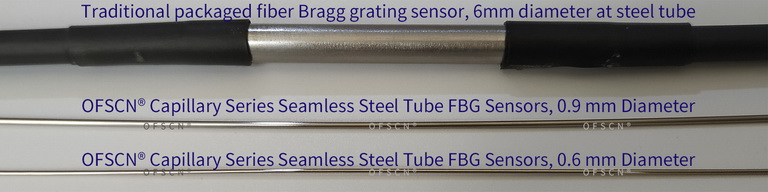
The main body of the OFSCN® Capillary Seamless Steel Tube FBG sensor ( FBG probe) is made of stainless steel seamless tubes. The standard outer diameter of the OFSCN® Capillary Seamless Steel Tube FBG sensor ( FBG probe) is 0.9 mm, with a wall thickness of 0.18 mm (see Figures 1 e 2). Based on our calculations, the pressure resistance of the main body of the sensor is greater than 180 MPa (external pressure).。
 |
|
Figura 4 |
Il numero 180 MPa potrebbe non essere intuitivamente comprensibile a molte persone. Nella vita quotidiana, la pressione atmosferica è di circa 0,1 MPa, che è più o meno equivalente alla pressione dell'acqua a una profondità di 10 metri sott'acqua. 1 MPa è circa la pressione dell'acqua a una profondità di 100 metri sott'acqua, e 180 MPa è circa la pressione dell'acqua a una profondità di 18.000 metri sott'acqua.
The deepest known point on Earth is the Mariana Trench, with a depth of 11,034 meters (approximately 110 MPa of pressure). If someone commissioned us to produce an OFSCN® Capillary Seamless Steel Tube FBG Sensor of such length e threw it into the deepest part of the Earth for fiber sensing, there would be no problem. Our sensor would not be damaged by the water pressure at that depth. Because our philosophy is: 'OFSCN®, make optical fiber stronger!'
 |
|
Figura 5 |
In terms of pressure resistance, there is no comparison between OFSCN® Capillary Seamless Steel Tube FBG Sensors e traditional FBG sensors. They are not product in the same level, so there is no need to elaborate further.
3. Application e Construction Advantages of OFSCN® Capillary Seamless Steel Tube Fiber Bragg Grating Sensors (FBG sensors , FBG probes) with High Pressure Resistance
The high pressure resistance of OFSCN® Capillary Seamless Steel Tube FBG Sensors greatly expands their range of applications. In the past, it was challenging to measure high-pressure locations deep within the Earth, but with the availability of OFSCN® seamless steel tube products (including FBG sensors, distributed fiber optic sensors, special fiber optic jumpers, e seamless steel tube sensing cables), communication e measurement in these high-pressure locations have become less difficult.
In terms of engineering construction, similar to the advantages of high tensile strength, the high pressure resistance of OFSCN® Capillary Seamless Steel Tube FBG Sensors directly reduces the difficulty e losses in construction, thus lowering the installation cost of the grating sensors.
Inoltre, è inevitabile che si verifichino collisioni durante la costruzione ingegneristica, e i sensori a reticolo possono essere direttamente coperti o compressi da altri materiali o oggetti in fase di test. In tali situazioni, la capacità dei sensori di resistere alla pressione laterale diventa cruciale.
Based on our calculations, the standard OFSCN® Capillary Seamless Steel Tube FBG Sensor can withstand lateral pressure of more than 9000 N. In practical applications, our FBG sensors can be placed on the road surface e withstand repeated pressure from small cars. Apart from surface wear, there will be no actual damage to the sensors.
DCYS is a professional manufacturer of high-strength FBG sensors, providing information such as fiber bragg grating temperature sensors that are resistant to internal pressure, FBG strain sensors that are resistant to external pressure, e FBG stress sensors that are resistant to lateral pressure; FBG brand is 'OFSCN'.