
Enciclopedia della Tecnologia di Sensing a Reticolo di Bragg su Fibra - FAQ FBG - FAQ Sensore FBG - FAQ Demodulatore FBG - Analisi dei Problemi Comuni di Applicazione FBG
Intervallo di Temperatura del Sensore di Temperatura a Reticolo di Bragg su Fibra - Intervallo di Temperatura: Resistenza alle Alte Temperature fino a 120°C, Resistenza alle Basse Temperature fino a -40°C - Termometro FBG
This article introduces the working temperature range of the OFSCN® 100°C Capillary Seamless Steel Tube Fiber Bragg Grating (FBG) temperature sensor (FBG thermometer), including its maximum high-temperature endurance e maximum low-temperature values. It also describes the methods e principles for determining the working temperature range of fiber bragg grating temperature sensors (including the stainless steel materials used e the FBG written using ultraviolet lithography).
L'intervallo di temperatura di lavoro dei sensori a reticolo di Bragg su fibra è determinato principalmente dal reticolo di Bragg su fibra (FBG) e dai materiali di confezionamento del sensore. Pertanto, è necessario condurre un'analisi da questi due aspetti.
1. Working Temperature Range of Packaging Material for OFSCN® 100-degree Celsius Capillary Seamless Steel Tube Fiber Bragg Grating Temperature Sensor (FBG Thermometer)
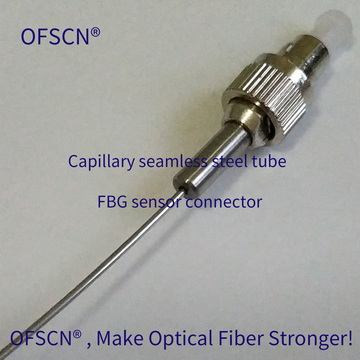
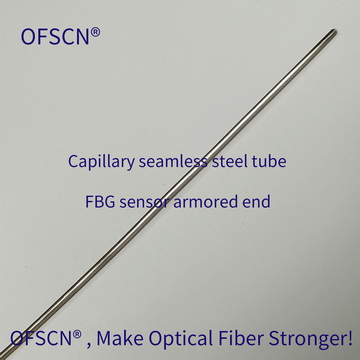
The OFSCN® 100°C Capillary Seamless Steel Tube Fiber Bragg Grating (FBG) temperature sensor developed by DCYS adopts a unique patented technology for stainless steel seamless tube packaging. Its structure is extremely simple, with no adhesive or Altro auxiliary materials. It is composed of only fiber bragg gratings (FBGs) and stainless steel seamless tubes. Therefore, determining its operating range only requires analyzing the fiber bragg gratings (FBGs) and stainless steel materials.
 |
 |
|
Figura 1 |
Figura 2 |
For the OFSCN® 100°C Capillary Seamless Steel Tube Fiber Bragg Grating (FBG) temperature sensor, its long-term working temperature range is from -40°C to +100°C, e its short-term working temperature range is from -60°C to +120°C. Both of these temperature ranges are far below the temperature limits of the stainless steel material. Therefore, this temperature range is mainly determined by the coating material, polyacrylate, used on the fiber bragg grating (FBG).
2. Intervallo di Temperatura Operativa di FBG a Femtosecondi per OFSCN® 100-degree Celsius Capillary Seamless Steel Tube FBG Temperature Sensor (FBG Thermometer)
 |
|
Figura 3 |
 |
| Figura 4 |
Nell'industria tradizionale delle telecomunicazioni, se vengono utilizzate fibre ottiche di alta qualità, l'intervallo di temperatura per le fibre rivestite in poliacrilato è generalmente da -40°C a +85°C.
The OFSCN® 100°C Capillary Seamless Steel Tube Fiber Bragg Grating (FBG) temperature sensor uses Corning SMF-28e fiber, e its long-term working temperature range is determined to be from -40°C to +100°C, with a short-term working temperature range from -60°C to +120°C. It can be repeatedly used at temperatures up to +120°C (continuous use in a +100°C environment). It should be noted that the above temperature ranges provide measured values for the high-temperature portion e theoretical values (not reaching the limits) for the low-temperature portion.
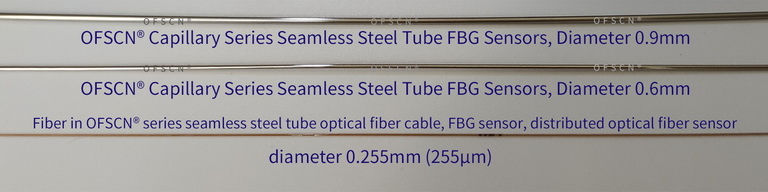 |
| Figura 5 |
Our philosophy is: 'OFSCN®, make optical fiber stronger!'
DCYS is a professional Sensore di Temperatura FBG da 100°C manufacturer, providing Sensore di Temperatura FBG da 100°C calibration method, calibration experiment, test report, temperature coefficient, calibration function and other information; 100°C fiber bragg grating temperature sensor brand is 'OFSCN'.