
Enciclopédia de Tecnologia de Sensoriamento por Rede de Bragg em Fibra - FAQ FBG - FAQ Sensor FBG - FAQ Demodulador FBG - Análise de Problemas Comuns de Aplicação FBG
Installation Method of FBG Sensor- The Maintenance Advantage of Light Weight- FBG Sensor with the Lightest Weight 1.7g/m
This article introduces the advantages e benefits brought by the lightweight nature of fiber bragg grating (FBG) sensors, including the expansion of application environments e convenience in engineering construction. It also introduces OFSCN® seamless steel tube series FBG sensors produced by DCYS. The sensors produced by DCYS have the advantages e characteristics of light weight, so they can be used for temperature, strain or stress measurement. It also shows some physical diagrams.
1. A Estrutura e o Cálculo de Peso do Sensor de Rede de Bragg em Fibra (Sensor FBG) (Sonda FBG) Leve
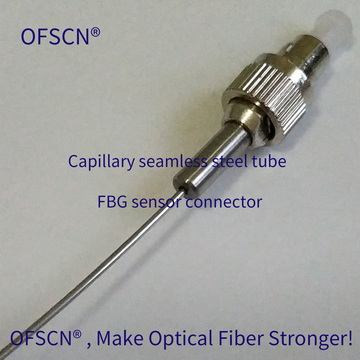
Corresponding to their small size, the 'OFSCN® Capillary Seamless Steel Tube Series Fiber Bragg Grating Sensors produced by DCYS have very light weight.
 |
 |
| Figura 1 |
Figura 2 |
Da física básica, sabemos que peso ou massa estão relacionados à densidade do material e ao volume (a fórmula de cálculo para massa é M=pv). No caso em que o material já está determinado (aço inoxidável), quanto menor o volume, menor o peso.
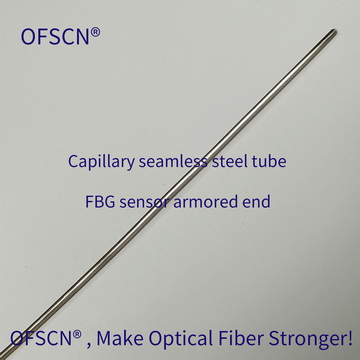
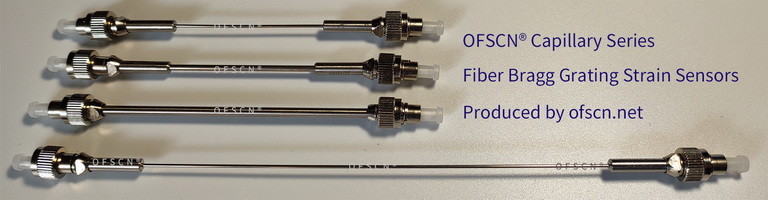
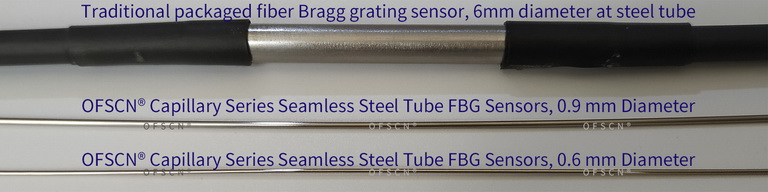
The OFSCN® Capillary Seamless Steel Tube Series Fiber Bragg Grating Sensor is precisely a type of fiber bragg grating sensor (FBG sensor) with an extremely small volume. The outer diameter of the main body of the standard product is only 0.9 millimeters (see Figura 1, Figure 2, and Figure 3 below).
Through our calculations and laboratory measurements, the weight of the main body of the grating sensor is approximately 3.2 grams per meter. In Outros words, a 2-meter long OFSCN® Capillary Seamless Steel Tube Series Fiber Bragg Grating Sensor (FBG sensor) without the connector weighs only 6 grams. This is in stark contrast to the significant weight of traditional fiber bragg grating sensors.
 |
|
Figura 3 |
2. Application e Construction Advantages of Lightweight for OFSCN® Capillary Seamless Steel Tube Series Fiber Bragg Grating Sensors (FBG Probes)
A natureza leve dos sensores de rede de Bragg em fibra tem um impacto similar nas medições de sensoriamento como seu pequeno tamanho. Quanto menor o peso (menor o volume) do sensor, mais fácil é integrá-lo firmemente à estrutura medida. Isso também minimiza o impacto na estrutura medida, permitindo uma reflexão mais precisa das propriedades físicas do objeto sendo medido (Referência: 'Benefícios do Tamanho Pequeno para Sensores de Rede de Bragg em Fibra'
 |
|
Figura 4 |
Por exemplo, se você precisar testar o desempenho térmico de uma jaqueta de plumas, você pode precisar colocar um sensor de temperatura de rede de Bragg em fibra (termômetro FBG) entre as plumas da jaqueta. Se você usar um sensor de rede de Bragg em fibra tradicional, seu tamanho grande pode deslocar as plumas durante a colocação, e seu peso pesado pode comprimir as plumas, causando mudanças estruturais significativas no objeto sendo medido. Como podemos afirmar que os resultados da medição são precisos sob tais circunstâncias?
However, if you switch to the OFSCN® Capillary Seamless Steel Tube Fiber Bragg Grating Sensor (FBG probe), its small size e lightweight nature minimize the impact on the object being measured, resulting in more accurate test results.
 |
| Figura 5 |
Our philosophy is: 'OFSCN®, make optical fiber stronger!'
DCYS is a professional manufacturer of ultra-light fiber bragg grating sensors, providing information on light FBG temperature sensors, high-strength FBG strain sensors, capillary FBG stress sensors, Vantagens dos Sensores FBG, etc.; light weight FBG sensor brand is 'OFSCN'.