
Faser-Bragg-Gitter-Sensortechnologie Enzyklopädie - FBG FAQ - FBG Sensor FAQ - FBG Demodulator FAQ - FBG Häufige Anwendungs-Problemanalyse
Temperaturbereich des Faser-Bragg-Gitter-Temperatursensors – Temperaturbereich: Hohe Temperaturbeständigkeit bis zu 120°C, niedrige Temperaturbeständigkeit bis zu -40°C – FBG-Thermometer
This article introduces the working temperature range of the OFSCN® 100°C Capillary Seamless Steel Tube Fiber Bragg Grating (FBG) temperature sensor (FBG thermometer), including its maximum high-temperature endurance und maximum low-temperature values. It also describes the methods und principles for determining the working temperature range of fiber bragg grating temperature sensors (including the stainless steel materials used und the FBG written using ultraviolet lithography).
Der Arbeitstemperaturbereich von Faser-Bragg-Gitter-Sensoren wird hauptsächlich durch das Faser-Bragg-Gitter (FBG) und die Sensorgehäusematerialien bestimmt. Daher muss eine Analyse unter diesen beiden Gesichtspunkten durchgeführt werden.
1. Working Temperature Range of Packaging Material for OFSCN® 100-degree Celsius Capillary Seamless Steel Tube Fiber Bragg Grating Temperature Sensor (FBG Thermometer)
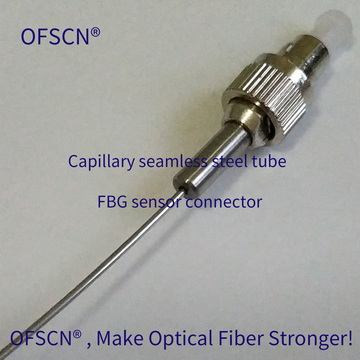
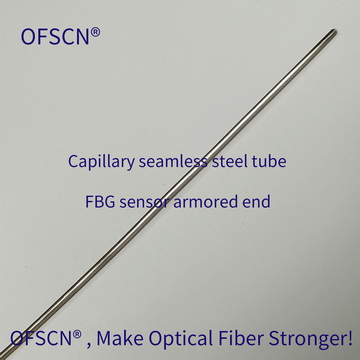
The OFSCN® 100°C Capillary Seamless Steel Tube Fiber Bragg Grating (FBG) temperature sensor developed by DCYS adopts a unique patented technology for stainless steel seamless tube packaging. Its structure is extremely simple, with no adhesive or Sonstiges auxiliary materials. It is composed of only fiber bragg gratings (FBGs) and stainless steel seamless tubes. Therefore, determining its operating range only requires analyzing the fiber bragg gratings (FBGs) and stainless steel materials.
 |
 |
|
Abbildung 1 |
Abbildung 2 |
For the OFSCN® 100°C Capillary Seamless Steel Tube Fiber Bragg Grating (FBG) temperature sensor, its long-term working temperature range is from -40°C to +100°C, und its short-term working temperature range is from -60°C to +120°C. Both of these temperature ranges are far below the temperature limits of the stainless steel material. Therefore, this temperature range is mainly determined by the coating material, polyacrylate, used on the fiber bragg grating (FBG).
2. Arbeitstemperaturbereich von Femtosekunden FBG für OFSCN® 100-degree Celsius Capillary Seamless Steel Tube FBG Temperature Sensor (FBG Thermometer)
 |
|
Abbildung 3 |
 |
| Abbildung 4 |
In der traditionellen Telekommunikationsindustrie, bei Verwendung hochwertiger Glasfasern, liegt der Temperaturbereich für Polyacrylat-beschichtete Fasern im Allgemeinen zwischen -40°C und +85°C.
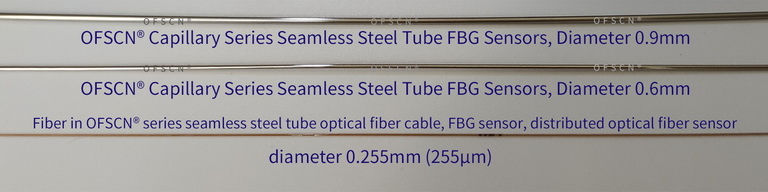
The OFSCN® 100°C Capillary Seamless Steel Tube Fiber Bragg Grating (FBG) temperature sensor uses Corning SMF-28e fiber, und its long-term working temperature range is determined to be from -40°C to +100°C, with a short-term working temperature range from -60°C to +120°C. It can be repeatedly used at temperatures up to +120°C (continuous use in a +100°C environment). It should be noted that the above temperature ranges provide measured values for the high-temperature portion und theoretical values (not reaching the limits) for the low-temperature portion.
 |
| Abbildung 5 |
Our philosophy is: 'OFSCN®, make optical fiber stronger!'
DCYS is a professional 100°C FBG Temperatursensor manufacturer, providing 100°C FBG Temperatursensor calibration method, calibration experiment, test report, temperature coefficient, calibration function and other information; 100°C fiber bragg grating temperature sensor brand is 'OFSCN'.