
Fiber Bragg Izgarası Sıcaklık Sensörü - FBG Sıcaklık Sensörleri - Termometre - Konsept Sınıflandırma Prensip Uygulama Video Fiyat
İçindekiler:
I. What is a Fiber Bragg Grating Temperature Sensor? Basic Concept of FBG Sıcaklık Sensörü/Thermometer
Fiber bragg ızgarası sıcaklık sensörü, bir Fiber Bragg Izgarası (FBG) hassas bileşen olarak kullanan ve bir fiber bragg ızgarası demodülatörü (FBG analizörü) ile ölçülen nesnenin ve çevresinin sıcaklığını tespit etmek ve izlemek için birleştirilen bir sensör türüdür.
Fiber bragg ızgarası sıcaklık sensörleri ayrıca FBG termometreleri, fiber bragg ızgarası sıcaklık probları, FBG sıcaklık probları vb. olarak da bilinir. Ürün sınıflandırması açısından, fiber bragg ızgarası sensörleri kategorisine aittirler ve bir tür optik fiber sensörüdür. Ürün işlevselliği açısından, sıcaklık sensörleri kategorisine aittirler.

II. Classification of Fiber Bragg Grating Temperature Sensors - FBG Sıcaklık Sensörü
1. Sıcaklık dayanım seviyesine göre, FBG sıcaklık sensörleri yüksek sıcaklığa dayanıklı, oda sıcaklığı ve düşük sıcaklığa dayanıklı tipler olarak sınıflandırılabilir.
2. FBG sıcaklık sensöründe kapsüllenen FBG sıcaklık ölçüm noktalarının sayısına göre, tek noktalı FBG sıcaklık sensörleri ve çok noktalı FBG sıcaklık sensörleri (seri bağlı FBG sıcaklık sensörleri, yarı dağıtılmış FBG sıcaklık sensörleri) vb. olarak sınıflandırılabilirler.
3. FBG sıcaklık sensörünün kapsülleme malzemesine göre, dikişsiz çelik boru FBG sıcaklık sensörleri, seramik FBG sıcaklık sensörleri, polimer FBG sıcaklık sensörleri vb. olarak sınıflandırılabilirler.
There are many Diğer classification methods for FBG temperature sensors, and DCYS can customize different types of FBG temperature sensors. These are not further elaborated here...
III. Measurement Principle of Fiber Optic Grating Temperature Sensors - FBG Sıcaklık Sensörü
FBG sıcaklık sensörleri kullanılarak sıcaklık ölçümü ve izleme için ölçüm prensibi aşağıdaki gibidir:
IV. Fiber Bragg Izgarası Sıcaklık Sensörlerinin Uygulamaları - FBG Temperature Sensor
FBG sensors are the most widely used type among all optical fiber sensors. They can be extensively applied in various independent temperature measurement environments, including temperature measurement, detection, and monitoring in mechanical and electrical products, industrial production, petroleum and petrochemical industries, power, railways, military, aviation, aerospace, metallurgy, chemical engineering, and Diğer fields. They can also be used for temperature compensation with various Diğer optical fiber sensors. DCYS does not further elaborate on this...
V. Videos of Common FBG Temperature Sensors Produced by DCYS
Here are physical videos of commonly used FBG temperature sensors produced by DCYS:
VI. FBG Sıcaklık Sensörlerinin Modelleri ve Parametreleri
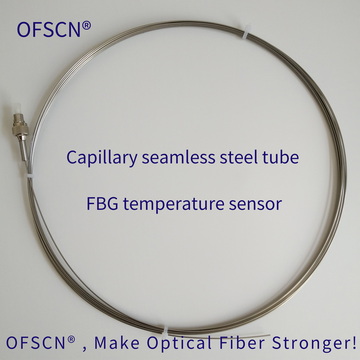
1. DCYS produces the OFSCN® Capillary Seamless Steel Tube series of FBG temperature sensors. These sensors use the company's proprietary 'stainless steel seamless tube packaging technology' to package the FBG. They have various models.
Ürün yapısı çok basittir ve tek noktalı fiber bragg ızgarası (FBG) veya fiber bragg ızgarası dizileri/demetleri (FBG'ler, yarı dağıtılmış) kapsülleyebilir. UV fotomaske FBG, femtosaniye lazer nokta nokta yazılmış FBG'ler ve çekme kulesi doğrudan yazılmış FBG'leri kapsüllemek için kullanılabilirler.
The FBG temperature sensors designed by DCYS have a maximum operating temperature range of -200℃ to 1000℃, making them resistant to both low ve high temperatures. The standard product sizes are 0.9mm/2.0mm/3.0mm, with the smallest diameter being 0.5mm ve the minimum weight per meter being 1.8 grams. They achieve the characteristics of being 'capillary'. The tensile strength of standard products ranges from 200N to 3000N, ve the compressive strength ranges from 70MPa to 200MPa.
Kılcal Dikişsiz Çelik Boru serisi FBG sıcaklık sensörlerinde kullanılan mükemmel mekanik özellikler sağlayan özel kapsülleme malzemeleri sayesinde, çeşitli nesnelerin yüzeylerine ve ayrıca su altı ortamlarına, korozif ortamlara, alev ortamlarına vb. kolayca yerleştirilebilirler. Bu, FBG sensörlerinin uygulama alanını büyük ölçüde genişletir.
2. DCYS also uses Diğer materials to package FBG temperature sensors, such as using the company's proprietary polymer materials to encapsulate FBGs, using the company's proprietary seamless steel tube nested polymer materials to encapsulate FBGs, and using commonly used ceramic tubes to encapsulate FBGs, providing insulation properties.
3. DCYS can also customize FBG temperature sensors with different structures according to customer requirements.
VII. FBG Sıcaklık Sensörlerini Seçmek için Önemli Noktalar ve Ana Parametreler
DCYS offers a wide range of the 'OFSCN®' series FBG temperature sensors, ve there are many models to choose from. When making your selection, consider the following:
1. Ölçmeniz gereken sıcaklığı belirleyin. Gerekli sıcaklık aralığını belirledikten sonra, ihtiyacınız olan Fiber Bragg Izgarası (FBG) zaten onaylamış olursunuz.
2. Sıcaklık ölçüm noktalarının sayısını belirleyin. Tek noktalı mı yoksa çok noktalı sıcaklık ölçümü mü? Çok noktalı ise, bir sensör için gereken FBG sayısını onaylayın.
3. Çalışma ortamını göz önünde bulundurun. Yalıtıma ihtiyacınız var mı? Bu, FBG sıcaklık sensörünün zırh katmanını belirleyecektir: dikişsiz çelik boru zırhı, alçak gerilim yalıtımlı zırh veya tam yalıtımlı seramik zırh.
4. Determine the sensor installation method. Once you have determined the sensor installation method, you can determine whether a customized sensor structure is required. DCYS has extensive experience in customizing FBG temperature sensors for various applications.
VIII. FBG Sıcaklık Sensörlerinin Fiyatlandırılması
After providing DCYS with information such as the required temperature range, number of measurement points, ve installation method, another important piece of information to clarify is the quantity you need to purchase.
As a manufacturer, the price of FBG temperature sensors from DCYS is directly related to the quantity you purchase. The price of FBG temperature sensors mainly includes material costs, production labor costs, ve calibration service fees. The production labor costs ve calibration service fees decrease rapidly as the production quantity increases, resulting in a rapid decrease in unit price.